
Learn how diecast item numbers, maker-specific casting marks, and UPC/GTIN codes differ, then use them to verify an exact model without guessing.
An item number, a casting number, and a UPC can all help identify a diecast model, but they do not necessarily identify the same thing. An item or product number is assigned by the maker to a cataloged product; a casting number or base mark follows that maker’s own convention; and a UPC-A barcode carries a 12-digit GTIN for a retail trade item.
That distinction matters when two models share the same vehicle body but differ in scale, color, wheels, packaging, or included accessories. The strongest identification preserves every number exactly and verifies each one against the source that defines it.
Key facts: item number, casting mark, and UPC
- Item or product number: A manufacturer’s own catalog key for a product. New-Ray labels one field “Item #,” while Mattel labels its field “Product#.”
- Casting number or base mark: Collector shorthand for an identifier molded, stamped, or printed on the model or base. There is no single cross-manufacturer meaning, so record the characters exactly and verify the maker’s terminology before treating the mark as a retail release number.
- UPC and GTIN: GS1 distinguishes the identifier from the symbol. A GTIN identifies the trade item; a UPC-A barcode is the scannable carrier for a GTIN-12.
- Leading zeroes matter: A GTIN is a string of digits, not an ordinary number to shorten. GS1 says meaningful leading zeroes in a GTIN-12 must be preserved.
- A barcode does not contain the whole product description: It carries an identifier used to retrieve product data from a database. The bars are not a miniature catalog record by themselves.
Why collectors should keep all three identifiers
A vehicle name alone describes the subject, not the exact collectible. “Chevrolet Silverado” can refer to several generations, makers, scales, colors, and package configurations. An item number can point to the maker’s catalog record. A physical mark can connect a loose model to a tooling or production family. A UPC can distinguish the packaged trade item used in retail systems.
Keeping the identifiers in separate fields prevents a common research error: copying one number into every database column because it produced a search result. That false precision can merge different releases or split one release into duplicates.
Item numbers are maker catalog identifiers
Manufacturers choose their own labels and formats. New-Ray’s official record for its 1:43 Chevrolet Silverado pickup with ATV lists Item # 19535B. Mattel’s official support record for the 2026 Hot Wheels 2020 Lamborghini Sian lists Product# JKL07.
Both are useful manufacturer identifiers, but their formats are different because they belong to different catalog systems. Do not remove letters, punctuation, or leading zeroes to make unlike identifiers look consistent. Search the maker name and the complete item or product number together.
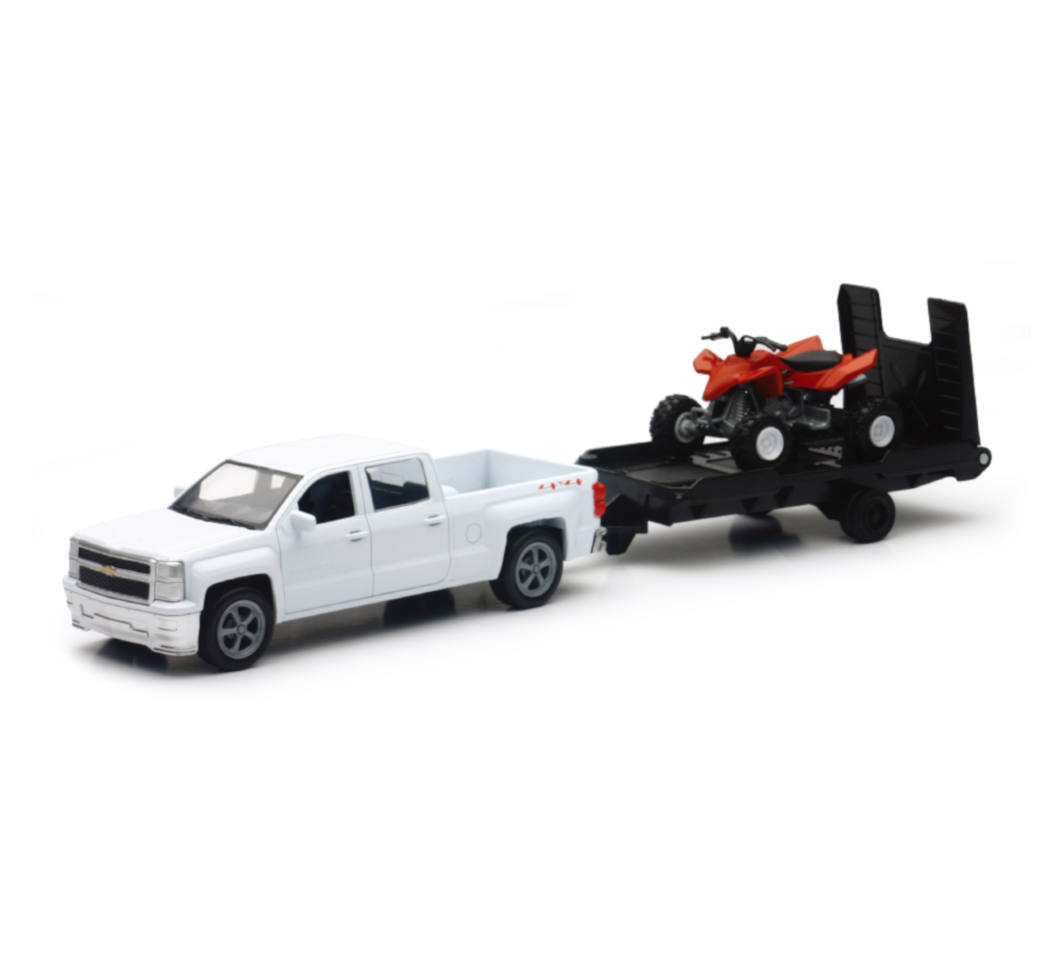
An item number can be printed on packaging, invoices, catalogs, or the model itself, but placement alone does not define its meaning. The manufacturer record is the authority for what that maker calls the identifier.
What a casting number can—and cannot—prove
Collectors often say “casting number” when referring to a molded or stamped code on the base. That mark can be extremely useful, especially for a loose model without packaging. It may help connect the miniature to a body tool, base, family, or maker record.
It does not automatically prove the exact retail release. One tool can be used for multiple colors, wheel sets, liveries, interiors, or packages. A code near a copyright notice can also be confused with a production date, patent notice, scale, country mark, or part number.
Use a casting or base mark as one piece of evidence:
- photograph the whole base before cleaning or disassembly;
- transcribe every character, including hyphens and leading zeroes;
- note whether the mark is molded, stamped, printed, or on a sticker;
- record nearby maker, vehicle, scale, country, and copyright text separately; and
- confirm the candidate with a second release-specific detail such as scale, color, wheels, packaging, item number, or UPC.
If an official source calls the code an item number, product number, model number, or SKU, keep that label. Do not rename it “casting number” merely because the same characters appear on the base.
UPC-A is the barcode; GTIN-12 is the identifier
GS1 US explains that a GTIN identifies a product, while the UPC is the barcode used to scan that identifier. In the familiar UPC-A format used at retail point of sale, the encoded data is a GTIN-12.
GS1’s General Specifications describe the GTIN-12 as a U.P.C. Company Prefix, an item reference assigned by the system user, and a final check digit. The standard also warns that the prefix makes the identifier unique worldwide but does not identify the geographic origin of the item.
For collection records, save the human-readable digits printed beneath the barcode. Do not try to infer a manufacturer’s country from the prefix, and do not drop the final check digit or a leading zero. If the barcode is damaged, mark the transcription uncertain rather than filling in a plausible-looking number.
Source snapshot: one New-Ray release
New-Ray’s official product page gives a clean example of identifiers working together:
- Product: Chevrolet Silverado pickup with ATV
- Scale: 1:43
- Item number: 19535B
- UPC / GTIN-12 digits: 093577195354
- Manufacturer page date: February 2, 2024
- Manufacturer category: X'treme Adventure, with 1:43 and Chevrolet classifications
The item number and UPC are not interchangeable. 19535B is the maker’s catalog item number; 093577195354 is the 12-digit retail identifier shown in the UPC field. Together with the scale, subject, accessory, and manufacturer source, they identify the release more confidently than “silver pickup” ever could.
Open the verified New-Ray Chevrolet Silverado record to see the item number, scale, manufacturer source, and authorized image kept with the exact model.
A five-step identifier workflow
1. Start with the strongest readable number
For packaged models, begin with the item or product number and the full digits beneath the barcode. For loose models, begin with the clearest base mark. Search the complete string in quotation marks with the maker name when using an ordinary search engine.
2. Preserve the source label
Write “Item #,” “Product#,” “UPC,” “GTIN,” or “base mark” exactly as the source presents it. A neutral label such as “unclassified base mark” is better than an unsupported claim.
3. Match release-level traits
Confirm at least one other trait beyond the represented vehicle: stated scale, color, wheel design, livery, interior, series, packaging, or included accessories. For the New-Ray example, the ATV and the 1:43 scale are useful checks.
4. Keep uncertainty visible
Use “unverified,” “partially legible,” or “maker terminology unknown” when evidence is incomplete. Never reconstruct missing barcode digits from a marketplace listing without an authoritative match.
5. Save the source and access date
Manufacturer pages change and old product pages disappear. Save the exact URL, the date accessed, and your own uncropped photographs. Those notes let another collector retrace the identification later.
Mistakes that create false matches
- Treating the vehicle’s model year as the diecast release year.
- Calling every number on the base a casting number.
- Dropping letters or leading zeroes from identifiers.
- Assuming a shared casting or body means identical packaging and retail release.
- Reading a company’s country from a UPC prefix.
- Using a marketplace title as the authority when it conflicts with the manufacturer record.
- Recording a barcode scan result without checking the printed digits.
Build a collector record that remains useful
For each model, store the manufacturer, represented vehicle, scale, series, item or product number, casting or base marks, UPC/GTIN, color, wheels, packaging, accessories, source URL, access date, and uncertainty notes in separate fields. Add clear photographs of the base and packaging that you own or have permission to keep.
Then search the EverythingDiecast catalog using the complete maker identifier. Open the candidate record and compare the source, scale, image, and release details before treating it as an exact match.
EverythingDiecast may earn a commission from eligible retailer links on model pages. This guide itself contains no affiliate links.
Source details, specifications, and source pages can change; verify current information at the linked source before relying on it.
Collector questions answered
Use these concise answers with the source-backed method above; each phrase represents a distinct way collectors search for this topic.
diecast casting number
Record every base character exactly, but do not treat a casting mark as a complete retail-release identity by itself.
diecast model release dates
Use a dated maker catalog or package record; a base copyright year may describe tooling rather than release.
new diecast releases
Confirm a new release with a current maker record and stable item number before trusting a preorder date.
discontinued diecast models
Call a model discontinued only with maker or dated-catalog evidence; out of stock is not proof.
Sources
- GS1 General Specifications, release 25.0 — accessed
- GS1 US barcode and identification FAQs — accessed
- New-Ray 1:43 Chevrolet Silverado with ATV — accessed
- Mattel Hot Wheels 2020 Lamborghini Sian product record — accessed