
Identify diecast semi trucks by separating the tractor, trailer or body, fleet finish, scale, maker, and item number before comparing exact models.
Diecast semi trucks can look similar while representing different releases. The reliable way to identify one is to separate the tractor, trailer or mounted body, fleet finish, scale, maker, series, and item number. A listing that says only “Freightliner semi” does not establish whether the miniature is a tractor alone, a refrigerated combination, a dry van, or another configuration.
Start with the complete product identity, then compare condition and current seller terms. This prevents a matching cab color from disguising a different trailer, scale, or manufacturer release.
Why tractor and trailer identity matters to collectors
A road-going semi is a combination of components. The tractor supplies the cab and fifth-wheel connection; the trailer supplies a separate cargo body and its own visible equipment. A straight or vocational truck instead carries a body on the same chassis. Miniatures preserve those differences, so “truck” is too broad for a permanent collection record.
Freightliner's official Cascadia specifications show why the cab configuration is meaningful: the real range includes day cabs and several sleeper-cab roof and length choices. Great Dane separately distinguishes refrigerated trailers by thermal systems, doors, floors, liners, and refrigeration-related equipment. Those full-size sources help name visible components, but they do not prove a miniature feature that the authorized product record does not state.
Collectors benefit from recording tractor and trailer separately because the same tractor family can be sold alone, with different trailer types, in different fleet colors, and at different scales. Completeness also matters: a missing trailer, refrigeration unit, mirror, mudflap, or package changes what is present, even when the tractor remains recognizable.
Three exact diecast semi trucks to compare
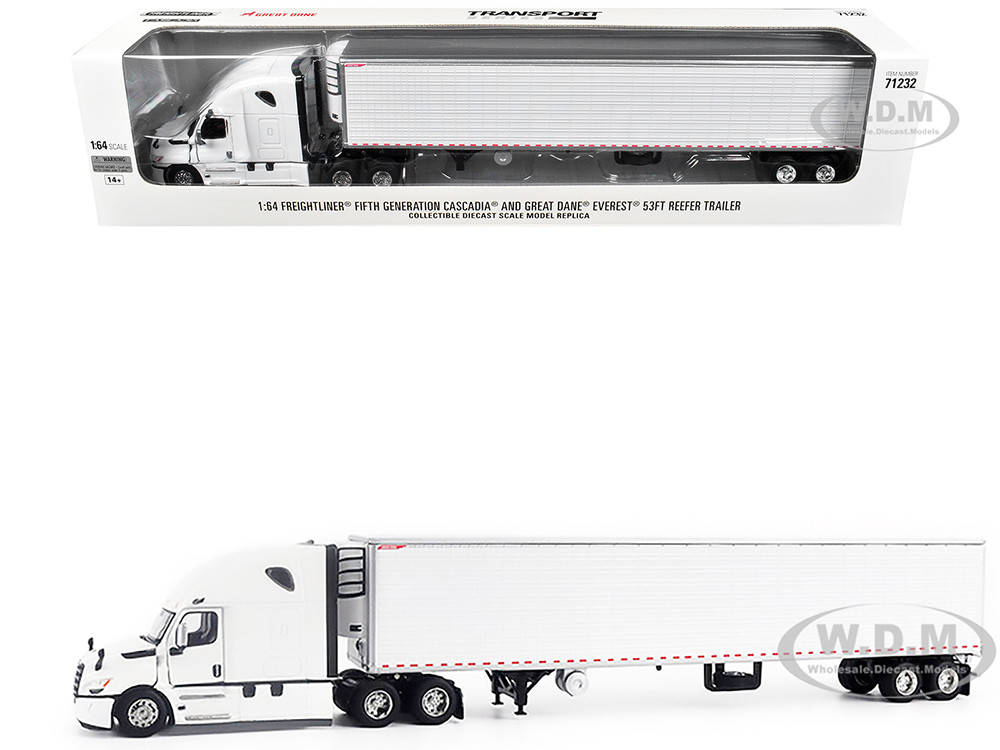
Diecast Masters Cascadia with refrigerated trailer — 1:64
The authorized record identifies this winter-white Transport Series combination as item 71232. Its title names a 2025 Freightliner Cascadia Gen-5 sleeper tractor and a Great Dane Champion 53-foot refrigerated trailer. The feed-backed specifications state 1:64 scale, real rubber tires, opening hood and doors, diecast construction with some plastic parts, and approximate dimensions of 13.75 by 1.75 by 2.625 inches.
The trailer description is part of the release identity. A refrigerated trailer is not interchangeable with a dry cargo trailer merely because both are 53-foot subjects. Look for the refrigeration equipment and preserve the trailer maker and type in the collection record.
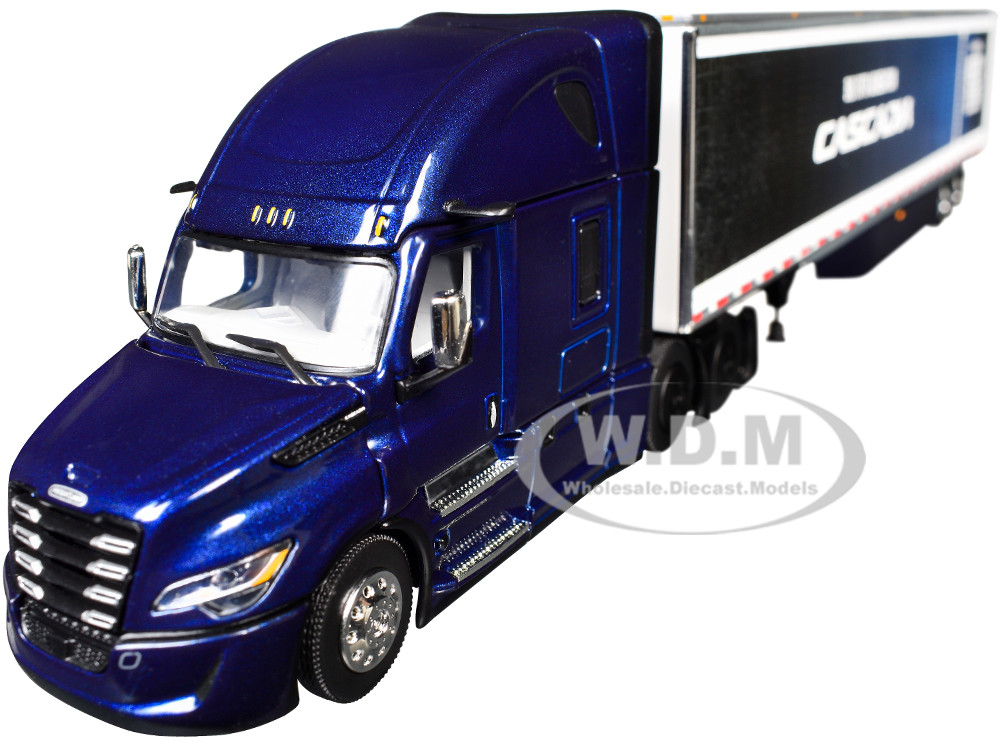
DCP First Gear Cascadia with Utility trailer — 1:64
Item 60-1999 is also 1:64, but its identity is different: a Fifth Generation Cascadia raised-roof sleeper, a 53-foot Utility trailer with skirts, and a midnight-blue finish. The authorized record states a pivoting fifth wheel, opening hood, detailed engine, chassis and undercarriage, rubber tires, and approximate dimensions of 15 by 2 by 2.5 inches.
This comparison shows why scale alone cannot identify a release. Both combination models are 1:64 Cascadias, yet the trailer maker and type, color, item number, dimensions, and published features differ. When buying loose, request clear photos of the tractor roof, fifth wheel, trailer nose, side skirts, rear doors, underside, and all maker marks.
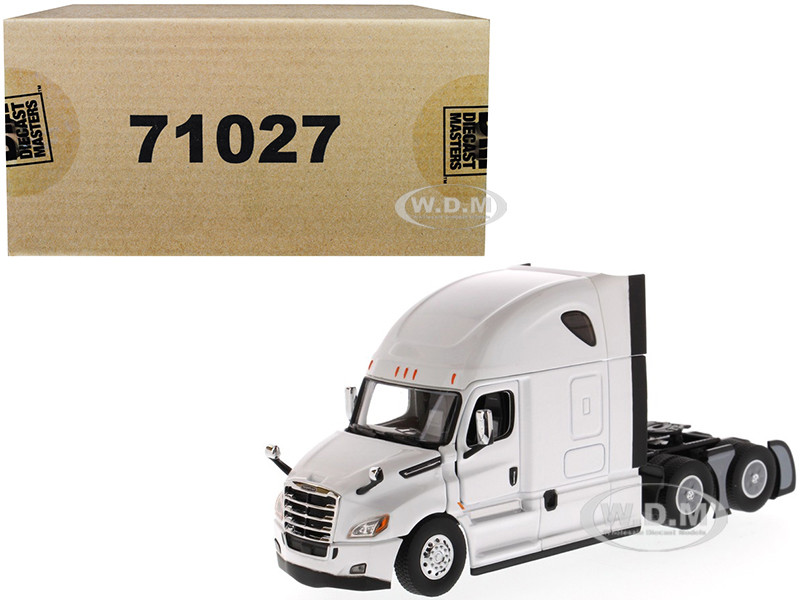
Diecast Masters Cascadia tractor only — 1:50
Item 71027 is a pearl-white New Cascadia sleeper-cab tractor in the Transport Series. The authorized record identifies 1:50 scale, opening hood and doors, rubber tires, diecast construction with some plastic parts, and approximate dimensions of 7.25 by 2.5 by 3.25 inches.
The absence of a trailer in the cataloged title is important. Do not describe a loose tractor as incomplete when the exact release was sold as a tractor alone. Conversely, do not attach an unrelated trailer and record the pair as a factory combination without item-number or package evidence.
How to identify diecast semi trucks without mixing releases
Use a field-by-field comparison instead of judging the whole silhouette at once:
- Tractor: Record maker, truck family, cab style, roof height, axle layout, and visible equipment.
- Trailer or body: Record the trailer maker and type—refrigerated, dry van, flatbed, tanker, auto carrier—or the mounted body on a straight truck.
- Fleet finish: Preserve color, logos, unit numbers, stripes, and trailer markings separately. A shared fleet livery does not prove a shared casting or item number.
- Scale: Keep 1:50 and 1:64 collections distinct unless you intentionally mix them. Compare actual listed dimensions before planning shelf space.
- Miniature maker and series: Diecast Masters Transport Series and DCP/First Gear are release information, not substitutes for the represented Freightliner brand.
- Stable identifier: Match item 71232, 60-1999, 71027, or another verified maker or merchant product number before treating two listings as the same release.
- Configuration and features: Record only what the authorized source states, such as opening hood, doors, pivoting fifth wheel, rubber tires, or a particular trailer.
- Completeness: Check mirrors, stacks, fuel tanks, steps, mudflaps, refrigeration hardware, landing gear, doors, fifth wheel, trailer, accessories, and original packaging.
Source snapshot
- Freightliner classifies the current Cascadia as a Class 8 on-highway truck and offers both day-cab and sleeper-cab configurations.
- Freightliner's published sleeper choices include mid-roof and raised-roof configurations; a generic “sleeper” label may therefore be incomplete.
- Great Dane treats refrigerated trailers as a distinct product type with thermal, floor, liner, door, and monitoring features designed around temperature-controlled cargo.
- The three exact miniatures above carry different stable identifiers: 71232, 60-1999, and 71027.
- Two are 1:64 tractor-trailer combinations; one is a 1:50 tractor-only release.
- The authorized catalog records provide dimensions and stated working features, but none of these records establishes rarity, production quantity, or investment value.
A buyer's verification checklist
1. Copy the complete product title before shortening it for your collection display. 2. Confirm whether the release includes a tractor only, a tractor and trailer, or a rigid truck body. 3. Match the trailer maker and cargo type, not just its length or color. 4. Verify scale, miniature maker, series, item number, and dimensions. 5. Compare the listing photos with the exact catalog record, including roof, axles, fifth wheel, trailer equipment, and underside marks. 6. Ask whether every pictured accessory and package component is included. 7. Compare current price, shipping, seller terms, and availability only after the exact release matches.
Browse the Semis & Commercial Trucks catalog to compare exact records, or open any pictured model above to review its documented identity and current eligible seller paths.
EverythingDiecast may earn a commission when you buy through eligible retailer links, at no additional cost to you.
Catalog specifications, prices, availability, and source pages can change. Recheck the linked model and primary-source records before purchasing or updating a permanent collection record.
Sources
- Freightliner Fifth Generation Cascadia specifications — accessed
- Great Dane refrigerated truckload trailers — accessed
- Diecast Masters Freightliner Cascadia tractor — item 71027 — accessed
- Diecast Masters Cascadia and Great Dane refrigerated trailer — item 71232 — accessed
- DCP First Gear Cascadia and Utility trailer — item 60-1999 — accessed