Identify a diecast model by maker, scale, casting number, UPC, color, and packaging—then search verified catalog records for the exact release.
The fastest way to misidentify a diecast model is to begin with the full-size vehicle and stop there. Two miniatures can represent the same car while differing in maker, scale, casting, color, wheels, packaging, or production run. Those differences are the identity of the collectible.
This checklist helps you move from “it looks like a Camaro” to a record you can verify.
Why exact identity matters to collectors
Collectors do not collect only the full-size car. They collect a specific miniature release: a maker, product line, scale, casting or item number, finish, wheel set, packaging, and sometimes a region or production variation. Those release-level details connect a loose model to its documented origin and prevent two similar-looking miniatures from being treated as the same collectible.
That provenance also makes a collection easier to organize, insure, trade, and shop for. “1969 Camaro” can return thousands of loose matches; “New-Ray 50473B” points to one documented release.
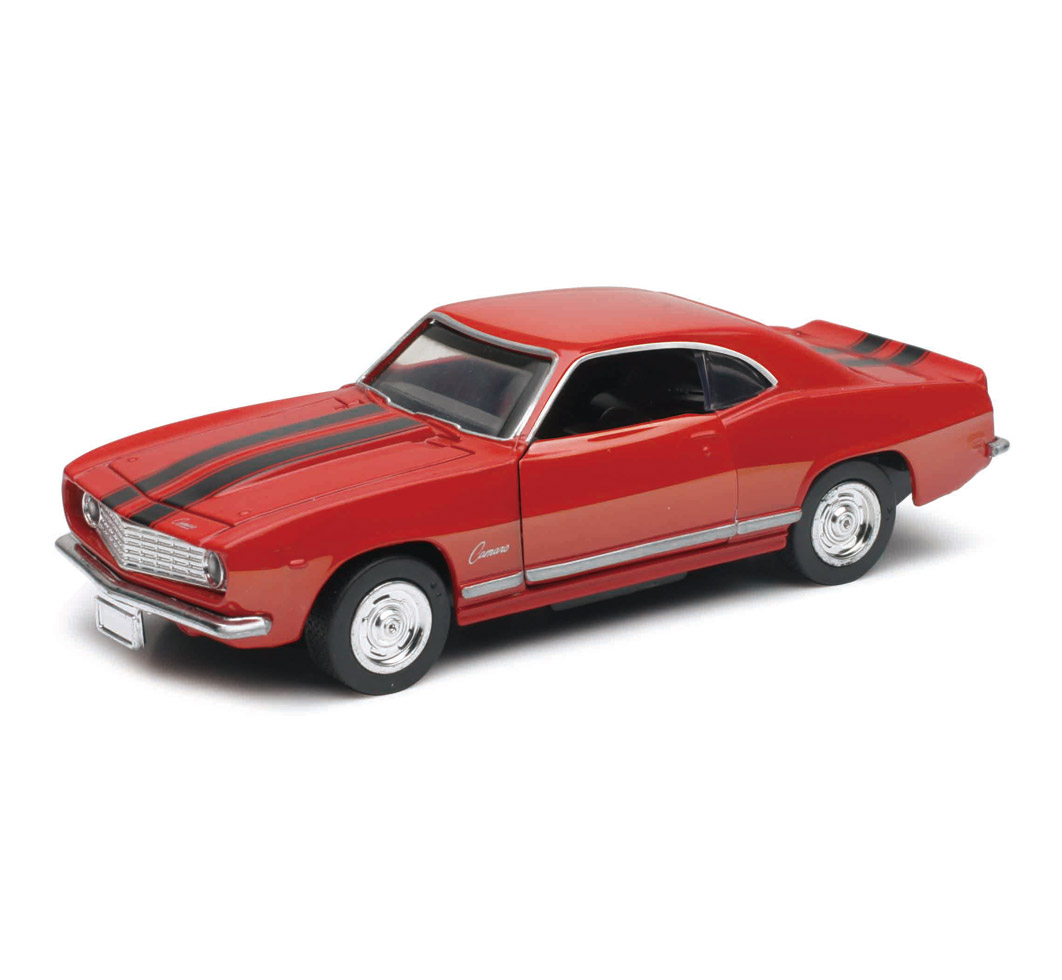
Source-backed example: New-Ray 1969 Chevrolet Camaro Z28
New-Ray's linked manufacturer record and authorized catalog data identify this release with facts a collector can actually search:
- Subject: 1969 Chevrolet Camaro Z28
- Maker and series: New-Ray City Cruiser
- Scale: 1:32
- Item number: 50473B
- UPC: 093577504736
View the verified New-Ray Camaro record to see how those identifiers, the authorized image, and the primary source stay together.
1. Photograph every identifying surface
Take one clear photo of the model from above, both sides, the front, the rear, and—most importantly—the base. Photograph the box or blister card separately. Keep logos, labels, stickers, and small printed text readable.
Do not crop out damaged packaging or replaced parts. Those details can distinguish a factory variation from a customized model.
2. Read the base before searching by appearance
The underside may identify the manufacturer, vehicle name, scale, country of manufacture, copyright year, casting number, or item number. Transcribe the characters exactly, including hyphens and leading zeroes.
A copyright year is evidence about when the tooling or intellectual property notice originated. It is not necessarily the year your particular model reached stores.
3. Treat scale as a claim to verify
Packaging may state a scale such as 1:18, 1:24, 1:43, or 1:64. If no scale is printed, measure the miniature and compare it with the documented length of the real vehicle. The result is an estimate because wheelbase, bumpers, and manufacturer proportions can vary.
Record an unprinted scale as “estimated,” not as a fact. That small distinction keeps uncertain data from spreading through collector listings.
4. Separate the vehicle from the release
Write down the subject vehicle first: make, model, generation, body style, and racing livery if applicable. Then record the miniature release: manufacturer, product line, item or casting number, color, wheels, interior, packaging, and any limited-edition marking.
For a racing model, driver, car number, event, season, and sponsor arrangement can be as important as the vehicle itself. Liveries often change within a season.
5. Search the strongest identifier first
An item number combined with the manufacturer name is usually more precise than a visual description. Search the manufacturer’s official catalog, packaging archive, or instructions before relying on marketplace titles. Retail listings are useful leads, but titles are often shortened, copied, or assigned to the wrong scale.
EverythingDiecast keeps source information with catalog records so a visitor can distinguish manufacturer-backed details from estimates and community research.
6. Confirm with two independent details
Before deciding that two listings describe the same release, match at least two release-specific details beyond the vehicle name. Good combinations include:
- item number and scale;
- casting number and base markings;
- color and wheel design;
- livery and racing number; or
- packaging series and release region.
If a source conflicts with the physical model, preserve the disagreement in your notes. Do not silently choose the cleaner answer.
7. Record uncertainty plainly
Use labels such as “unknown,” “estimated,” or “unverified” when evidence is missing. An honest incomplete record is more useful than a precise-looking guess. Keep the original source URL and the date you accessed it, because manufacturer pages and retailer inventories change.
A reusable identification record
For each model, save:
- manufacturer and product line;
- item, casting, and barcode numbers exactly as printed;
- represented vehicle and year;
- stated or estimated scale;
- color, wheels, interior, and livery;
- packaging type and region;
- source URLs and access date; and
- one uncropped image you own or have permission to publish.
Find the exact model—or the next one for your collection
Search the EverythingDiecast catalog using the strongest identifier you found. Open the matching model record to verify its source, images, and any eligible retailer links before buying. If there is no match yet, your notes are ready for comparison when that release is added.
EverythingDiecast may earn a commission from eligible retailer links elsewhere on the site. This guide contains no affiliate links.
Source details, specifications, and availability can change; verify current information at the linked source before relying on it.
Collector questions answered
Use these concise answers with the source-backed method above; each phrase represents a distinct way collectors search for this topic.
identify diecast model
Start with maker, scale, base markings, item number, color, wheels, and packaging; confirm at least two release-specific details.
diecast model cars
The collectible identity includes the miniature's maker, scale, series, finish, and release identifiers—not only the full-size vehicle.
diecast car database
A trustworthy database separates verified manufacturer facts from estimates and keeps each claim tied to its source.
diecast car catalog
Narrow a catalog by maker, scale, vehicle, category, and identifier before comparing an exact record.
diecast model search
Search the strongest identifier first—usually maker plus item, casting, or UPC number—not color alone.
find diecast models
Match the represented vehicle and at least two miniature-specific traits such as scale, wheels, livery, or packaging.
diecast model identification
Identification is strongest when physical markings, authorized catalog data, and photographs support the same release.
diecast manufacturer database
Use manufacturer indexes as starting points and preserve item numbers, dates, and materials exactly as published.
Sources
- New-Ray official product catalog — accessed
- Creative Commons license chooser — accessed