
Identify racing diecast by matching driver, number, team, event, season, sponsors, chassis, scale, maker, and release identifier.
To identify racing diecast, read the livery as a dated record, not just decoration. Driver, car number, team, series, event, season, sponsor layout, chassis, maker, scale, finish, and item number can all change while the basic vehicle shape stays familiar.
Identify racing diecast from the official record outward
First write down only what is visible: number, driver name, team marks, primary sponsor, contingency decals, tire brand, body style, and unusual damage or confetti. Next identify the represented competition using an official entry list. Finally match the miniature itself through its manufacturer, scale, package, and stable item number. Keeping those three steps separate prevents an on-track appearance from becoming an invented diecast release.
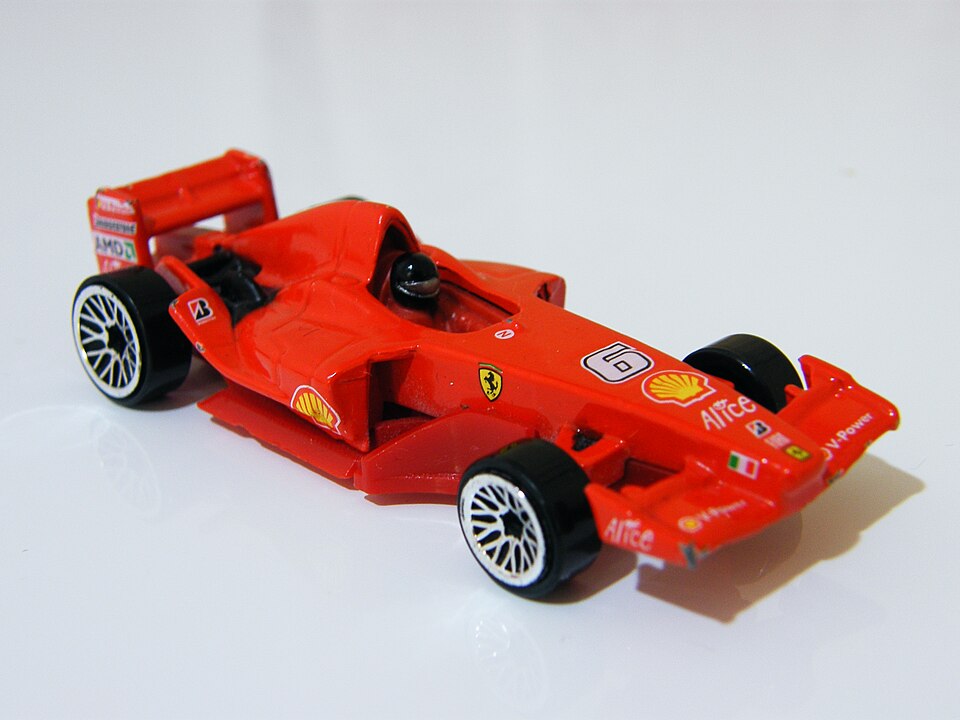
The photograph above documents a Hot Wheels Ferrari Formula One model associated with 2006, but the source record does not verify its scale or retail item number. That uncertainty is important. The livery can support subject identification while still being insufficient to prove the exact miniature release.
Seven fields that distinguish a race model
1. Series and season: NASCAR Cup, Formula One, IndyCar, WRC, IMSA, and other series use different numbering and event records. 2. Driver and car number: record both; numbers can move between teams or drivers. 3. Team and chassis: official entry lists connect a driver and number to the entered constructor or vehicle. 4. Event configuration: a raced-win model may reproduce damage, tape, confetti, tires, or a one-race sponsor arrangement. 5. Sponsor map: compare hood, roof, doors, quarter panels, wing, and smaller contingency marks—not only the primary color. 6. Miniature specification: maker, scale, series, finish, packaging, autograph, and edition are product facts, not race facts. 7. Stable identifier: a manufacturer SKU or package code anchors the collectible release.
Why entry lists and results answer different questions
An entry list establishes who and what was entered: driver, number, team, and often chassis or manufacturer. A classification or result establishes what happened at the event. The FIA publishes event documents and classifications for Formula One; NASCAR publishes dated Cup Series entry lists. Use the entry document to establish identity and the result to support a race-specific configuration. Neither proves that a miniature was manufactured. That final step still requires a manufacturer or authorized merchant SKU.
The FIA's 2025 Formula One classification, for example, keeps driver and constructor results distinct across events. Its event document pages also publish dated entry lists and decisions. That structure is a good model for a collection record: preserve season, event, driver, team, chassis, and result in separate fields instead of compressing them into a title.
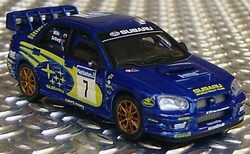
This AUTOart Subaru image is labeled as a 2003 World Rally Championship model in its Commons source. It demonstrates why collector interest follows a specific livery and era: the body generation, rally graphics, number, wheels, and event-related markings can separate it from road-car and other rally releases. The source still leaves scale and casting number unverified, so the EverythingDiecast record presents it as a source photograph rather than an exact retail SKU.
Race-win, standard, and fantasy liveries are not interchangeable
A standard season car represents a planned livery. A race-win release may reproduce event-specific wear and celebration details. A throwback, test, presentation, or one-off sponsor scheme can be limited to a specific weekend. Fantasy or tribute graphics may resemble a real car without representing an official entry. Record the label used by the maker and then test it against official event evidence.
Never infer an edition size, production quantity, release date, or rarity from the race's importance. A championship car can have many miniature variants; an obscure one-race livery can have none. Collector demand is separate from documented identity.
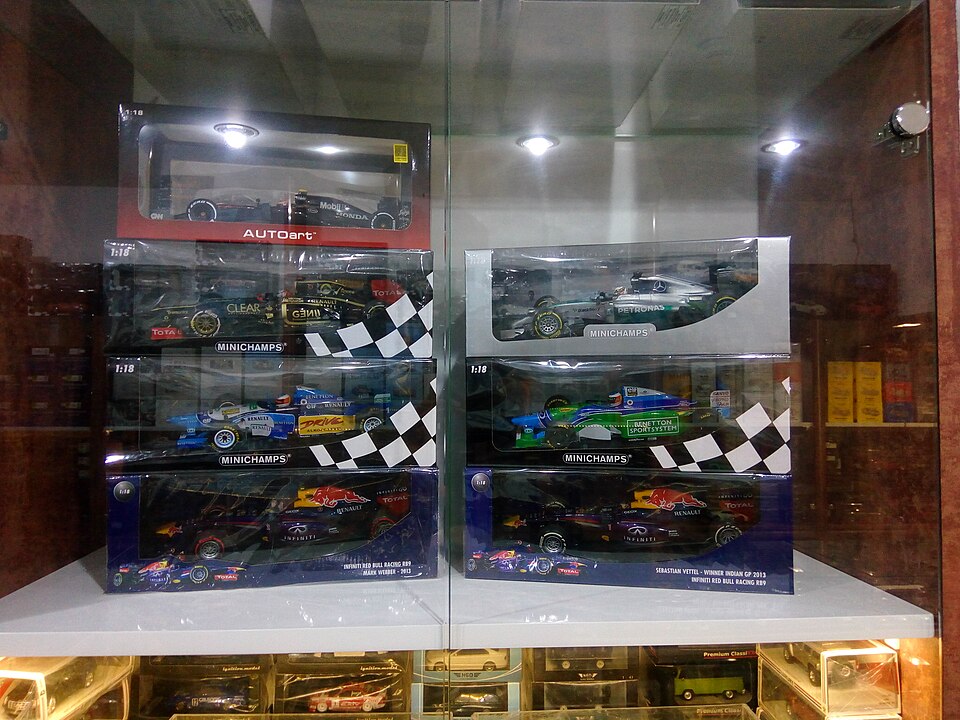
This MINICHAMPS photograph proves the presence of a Formula One miniature but not its driver, season, event, scale, or SKU. It is a useful negative example: attractive imagery is discovery evidence, not permission to fill missing racing fields.
The same method works beyond Formula One and NASCAR
- For diecast truck models, distinguish tractor, trailer, body configuration, fleet livery, number, scale, and maker SKU.
- For diecast movie cars, verify production title, scene-specific vehicle configuration, license, and miniature release.
- For diecast police cars, record agency, jurisdiction, unit markings, light bar, represented vehicle year, scale, and item number.
- For diecast construction vehicles, capture equipment maker, machine, attachment, accessories, scale, and product identifier.
- For diecast aircraft models, preserve type, operator, registration or tail code, livery era, scale, and release number.
These subjects use liveries as identity evidence, but they should not be mislabeled as racing releases when their role is different.
A repeatable verification order
- Photograph every side, the roof, base, package, and close sponsor details.
- Search official series entry lists for season, driver, number, team, and chassis.
- Search official results only when the model claims an event or raced-win configuration.
- Confirm maker, scale, finish, package, and SKU through a manufacturer or authorized feed.
- Mark any missing field unknown instead of borrowing it from a similar model.
Browse the Racing catalog and compare Formula One, NASCAR, rally, and other records by maker, scale, subject, and source.
Entry lists, results, liveries, and product catalogs can change; verify current information at the linked official sources before relying on it.
Collector questions answered
Use these concise answers with the source-backed method above; each phrase represents a distinct way collectors search for this topic.
identify racing diecast
Match driver, number, event or season, sponsors, vehicle, maker, scale, and item number because liveries change.
diecast sports car models
Separate road-car releases by generation, trim, body style, color, wheels, scale, maker, and catalog identifier.
diecast race car models
Race models need livery evidence: driver, number, team, series, event, season, and sponsors.
diecast truck models
Separate tractor, trailer, body configuration, fleet livery, scale, and maker identifiers.
diecast movie cars
Verify production title, scene-specific configuration, vehicle version, license, and miniature release.
diecast police cars
Agency markings, unit, jurisdiction, light bar, vehicle year, and scale distinguish similar releases.
diecast construction vehicles
Record equipment maker, machine, attachment, scale, accessories, and diecast item number.
diecast aircraft models
Record type, operator, registration or tail code, livery era, scale, and release number.
Sources
- FIA 2025 Formula One classifications — accessed
- FIA 2025 Formula One decision documents — accessed
- NASCAR Cup Series entry list for Circuit of The Americas — accessed
- Wikimedia Commons: F1 Ferrari GP 2006 Hot Wheels — accessed
- Wikimedia Commons: AUTOart Subaru Impreza WRC 2003 model — accessed

